David Copperfield
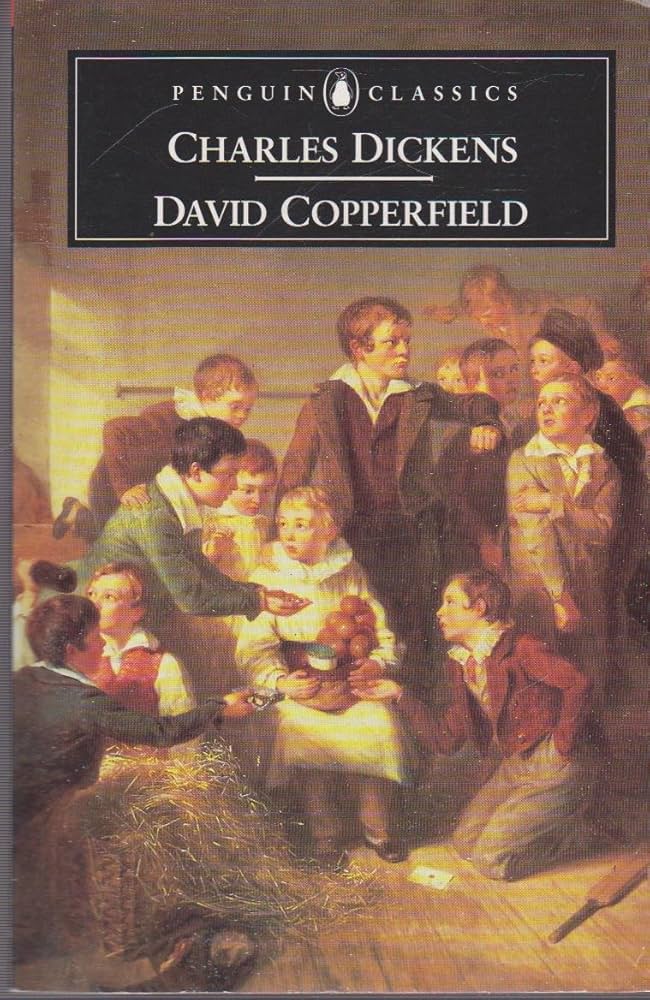
A sprawling novel with more brilliant characters and subplots than I quite knew what to do with.
Whether I shall turn out to be the hero of my own life, or whether that station will be held by anybody else, these pages must show.
So reads the first sentence of David Copperfield, the novel that Charles Dickens himself claimed was always his favourite work. I have never, at least by choice anyway, read any Victorian literature. I was drawn to David Copperfield because of the book’s setting: large portions of the book take place in the East Anglian towns of Lowestoft, Great Yarmouth, and Blundeston. Dickens gives us a glimpse of what life was like in Victorian England in these areas. I think it would be impossible for me to review a work of this length and ambition with the care and diligence it deserves. It is a sprawling fictional autobiography which follows David’s life from childhood to adulthood. How will Mr. Copperfield turn out? Will he be able to overcome the pain and heartbreak he goes through in his early years and make his way in the world?
Along the way, we meet many characters: the brooding Murdstones, the wily Micawbers, and the cunning Steerforth to name a few. The world that Dickens builds is fantastic: you spend enough time with the various characters to get to know them well. I was very impressed by how three-dimensional the characters were; Dickens has a talent for taking characters who seem archetypal: the cruel stepfather, the feckless debtor and the charming friend, and subverting our expectations of them. In fact, Miss Mowcher, who is described as a dwarf, even reminds David of this:
“‘Take a word of advice, even from three foot nothing. Try not to associate bodily defects with mental, my good friend, except for a solid reason.’”
David Copperfield is said to be Dickens’ most autobiographical novel. There is very little space between Dickens and his protagonist. But within that closeness there is another dynamic at work; that being the split between the younger David, who we follow, living through the events of the story, and then the older David, the one sitting behind his desk, writing the book we are reading, shaping his younger self’s story into narrative. It reminded me of Dante’s Divine Comedy: Dante the pilgrim moving through Hell, Purgatory and Heaven, and Dante the poet who has already survived the journey and can now turn it into art. It’s interesting seeing how David changes throughout the novel, as more time passes and he grows into his older self, and the gap between the two versions of him we see converges.
Where I think the book suffers for me is it its sheer size. The book was originally published serially, two chapters at a time, and this makes for a book with many different subplots, which I found was distracting me from the main story. More than a couple of times, I would sit down with David Copperfield, read it for an hour, and feel like I hadn’t progressed the story at all. There are just so many subplots that Dickens starts, and while I think he does an impressive job of converging them into an overall conclusion, some of them still feel loose, and like they didn’t need to be included in the first place. So I think the novel’s strength, which is its expansiveness and character, is a double edged sword. There are stretches where I admired the world Dickens had created, but I didn’t get the feeling he had any urgency about what would happen next.
I don’t regret reading David Copperfield for a second. There is an incredible amount to admire here, and I can see why so many people consider it Dickens’ masterpiece. I would even say that I will probably appreciate it more when more time has passed, when I’ve had longer to sit with it. But I also came away feeling that I admired it as a great work more than I enjoyed it. Perhaps that’s inevitable with a novel of this size, but I’m not sure I’ll be rushing to pick up another Dickens just yet.
Enjoyed this post? Subscribe to make sure you never miss a review.