My Year of Rest and Relaxation
A strange, cynical, and oddly funny account about grief, privilege and the possiblity of starting again
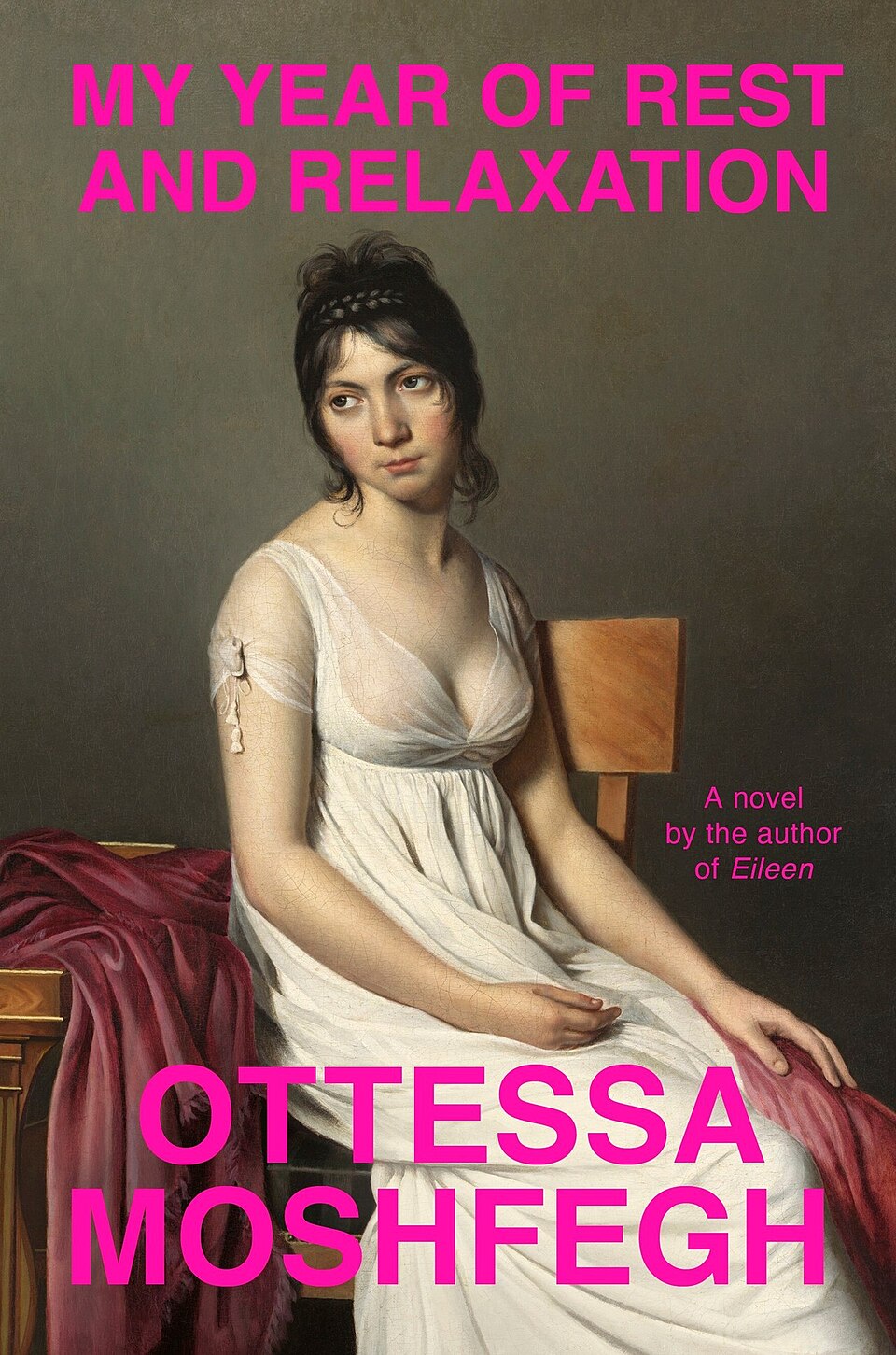
My Year of Rest and Relaxation is a novel about withdrawal. Its premise is simple: what if you could opt out of your own life for a year, sleep through almost all of it, and wake up renewed? Ottessa Moshfegh has taken that idea and placed it in the hands of a cruel narrator who is unusually difficult to sympathise with.
Our unnamed narrator is a young woman living in New York City in the year 2000. She is described as being tall, conventionally attractive, and financially secure (albeit living off a large inheritance, but there is no mention of that dwindling at all). Clearly she is designed to be a character that the reader would be envious of. Yet, owing to her grief at having lost both of her parents, she believes that her best course of action would be to take a year off. As in, literally hibernate for a year, with the help of progressively stronger sedatives and prescription medications. Contrasted with our narrator is her best (only?) friend Reva, who is bulimic and who does not have the luxury of financial freedom. However, the narrator is not sympathetic to her; indeed, she spends a lot of her time punching down on Reva.
I will say that I did find this book pretty easy to read through. All of this is delivered in a way that is cynical but also quite comic. Enabling the narrator to live this pitiful lifestyle is Dr. Tuttle, a psychiatrist (I think a caricature of a psychiatrist is probably more accurate) who is eager to supply her with increasing doses of stronger and stronger medications. It’s clear that our unnamed protagonist is severely depressed and is struggling with grief following the death of her parents, so you wouldn’t think it would make for easy reading, but Mossfegh manages to create a narrator with an interesting voice. It’s strange how I didn’t find this book repetitive. Although there isn’t much of a plot, the book is more about the interiority of the characters.
There is something deliberately antagonistic about the way Moshfegh has written her narrator. Not just because she is cruel and selfish, but because her voice seems designed to frustrate your instinct to either sypathise or empathise with her, or to condemn her. She withholds remorse, is unsupportive of Reva, and repeatedly resists the sort of explanation that could potentially make her behaviour easier to forgive.
I feel like Moshfegh has gone out of her way to write a book that is inflammatory. At the same time, she has also challenged us to ask ourselves about whether it is possible to escape yourself, even if you were able to withdraw completely from the world. I think this is reason she has designed the narrator as she is, as it would be harder to feel sympathetic to her desires, if she didn’t have these conventional advantages in life. That she rejects them seems almost cruel, but it does speak to how her problems are existential, likely worsened by grief, rather than just circumstantial.
The ending of the book seems similarly provocative. The narrator receives no punishment for her selfishness. Cruelly, she is able to quit her cocktail of medications without any withdrawal symptoms, and is allowed to decide to live life on her own terms. Reva, on the other hand, has tried her hardest to do so throughout the novel, only to die in the 2001 attacks on the World Trade Centre. Not only that, but the narrator is able to appropriate Reva’s death into a symbol of beauty or freedom in her final moment. Our narrator has managed to even make a nation’s public tragedy and a close friend’s personal tragedy about herself, a final act of self centredness that seems designed only to provoke the reader. I didn’t feel personally attacked by the ending, but I do feel Moshfegh reached for one of the most emotionally loaded images imaginable to combine with the narrator’s personal rebirth. As I finish writing this, I’m still not sure whether to feel like the ending was a cheap shot, or whether it was a clever final expression of the narrator’s solipsism. That I am still feeling like that a month after reading it means that on some level, it succeeded.
Enjoyed this post? Subscribe to make sure you never miss a review.